
BLUF (Bottom Line Up Front)
This article reviews how aerobic fitness impacts firefighters’ ability to perform their job, stay healthy, and avoid injuries. Despite fewer fires today compared to past decades, sudden cardiac death (SCD) remains the leading cause of on-duty firefighter fatalities, especially during fire suppression and physical training. Many firefighters do not meet the National Fire Protection Association (NFPA) recommended standard for aerobic fitness (VO₂max ≥ 42 ml/kg/min). Poor aerobic fitness raises the risk of overexertion, injury, slower response times, and fatal cardiac events. This article stresses the critical need for regular conditioning, health monitoring, and understanding how firefighting gear increases the body’s workload during emergencies.
Purpose of the Study
The article aimed to:
- Explain the health and operational risks firefighters face when they fail to meet NFPA aerobic fitness standards.
- Review the oxygen demands of key fire suppression tasks.
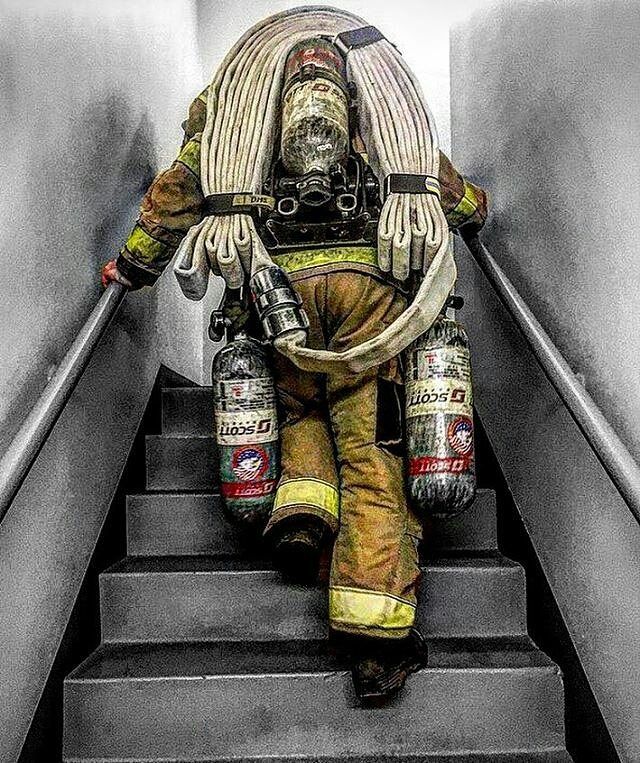
- Describe how personal protective equipment (PPE) and self-contained breathing apparatus (SCBA) impact performance.
- Highlight how fitness levels influence sudden cardiac death risk, occupational performance, and injury rates.
Subjects and Research Methodology
- This is a narrative review of multiple peer-reviewed studies.
- Data analyzed included aerobic requirements for firefighting tasks and the physiological strain caused by PPE and SCBA.
- The review also incorporated epidemiological findings about firefighter injuries, SCD, and hypertension.
- Exercise guidelines were drawn from ACSM recommendations for improving aerobic fitness.
Findings
1. Cardiovascular Risk and Aerobic Fitness Deficits
- Sudden cardiac death (SCD) accounts for about 45% of on-duty firefighter fatalities, most often occurring during fire suppression or physical training activities.
- Although the number of fires has dropped significantly (from 1,098,000 in 1977 to 499,000 in 2018), the proportion of deaths due to SCD has remained steady.
- 37% of firefighters (195 out of 527) studied did not meet the NFPA’s aerobic fitness standard of VO₂max ≥ 42 ml/kg/min.
- Only 20% of firefighters meet general aerobic exercise recommendations for maintaining health benefits.
- Participation in regular vigorous-intensity exercise is critical:
- Firefighters who engage in vigorous exercise less than once per week face a 74.1% relative risk of SCD during or after exertion.
- Those exercising five or more times per week have a 10.9% relative risk, a substantial decrease.
2. Aerobic Demands of Fire Suppression Tasks
Firefighting tasks vary greatly in their aerobic requirements, but many involve vigorous or near-maximal effort, particularly when full gear is worn.
- Carrying equipment upstairs requires about 34–44 ml/kg/min of oxygen, equating to 82–105% of the NFPA standard without gear.
- Advancing charged hoselines uses about 23–32 ml/kg/min, but effort levels rise sharply when wearing PPE.
Wearing PPE and SCBA makes every task significantly harder:
- Firefighters carry an additional 22 kilograms (about 50 pounds) of equipment.
- Aerobic capacity is reduced by 8–22% when using PPE and SCBA.
- Heart rate rises by 20–30 beats per minute, and systolic blood pressure increases by 15–23 mmHg during activity while geared up.
- Research by Lesniak et al. found that completing simulated fireground tasks while wearing PPE and SCBA took 44% longer than when wearing standard workout clothes.
In short: firefighting demands are already high — PPE and SCBA make them even more intense, requiring a fitness level higher than the NFPA minimum to work safely and effectively.
3. Health Implications of Poor Aerobic Fitness
- Fire suppression environments (high heat, physical exertion) create physiological conditions that can trigger cardiac events, especially among firefighters with uncontrolled hypertension.
- High blood pressure is common in firefighters and can increase the risk of blood vessel rupture or clot formation during intense activity.
- Regular cardiovascular screening and management are critical, as hypertension often presents without obvious symptoms.
4. Injury Risk and Operational Performance
- Firefighters with lower aerobic fitness fatigue faster, slowing critical response times during emergencies.
- Crews with fewer personnel (three-person teams) took 25% longer to complete fireground tasks compared to four-person crews, illustrating how limited capacity slows operations.
- Overexertion — leading to strains, sprains, and muscular pain — is the leading cause of firefighter injuries on duty.
- Firefighters with a VO₂max of ≤42 ml/kg/min were 2.2 times more likely to sustain injuries compared to those with greater aerobic fitness.
- Overexertion injuries also lead to higher workers’ compensation costs compared to other types of injuries.
Analysis and Interpretation of Findings
The article reinforces that aerobic fitness is fundamental for firefighter readiness, safety, and longevity. Firefighting tasks — especially when combined with the added burden of PPE and SCBA — require physical capacities that often exceed the minimum NFPA aerobic fitness guideline.
Firefighters with poor aerobic fitness face multiple compounding risks: they fatigue earlier, perform more slowly, increase risks to their team and themselves, and are more likely to suffer cardiac events or injuries under stress. Even seemingly moderate fireground activities can become vigorous or near-maximal in intensity once gear is worn.
Moreover, participation in regular vigorous exercise can dramatically lower the risk of SCD, while low-frequency exercise habits leave firefighters highly vulnerable. Departments must recognize that operational effectiveness and firefighter safety are directly tied to aerobic conditioning.
Annual health screenings, fitness programs emphasizing cardiovascular endurance, and education about the effects of gear on performance must become standard practice.
Conclusion
Firefighters must view aerobic fitness not as a personal choice but as a professional necessity. Meeting or exceeding a VO₂max of 42 ml/kg/min is essential to handle the physiological strain of firefighting tasks, especially while wearing PPE and SCBA.
Improved aerobic fitness reduces the likelihood of sudden cardiac death, enhances on-scene performance, lowers injury rates, and protects the longevity and safety of both the firefighter and their team. Departments and individual firefighters alike must commit to structured, regular aerobic training, frequent health screenings, and proactive fitness standards to ensure readiness for the demands of their critical mission.
Source
Langford, E., Snarr, R., & Abel, M. (2021). Implications of Aerobic Fitness on Firefighters’ Occupational Performance, Health, and Risk of Injury. TSAC Report, Vol 59, Issue 5.